Reasons Behind Samsung Electronics and SK Hynix Banning ChatGPT
Are you aware that Samsung Electronics has completely prohibited the use of ChatGPT within its DX division, which is responsible for its mobile and consumer electronics business sectors?
Since the rapid growth of ChatGPT between 2022 and 2023, Samsung Electronics has already imposed a complete ban on ChatGPT within its DX division due to concerns over potential leaks of confidential information via the SaaS (Software as a Service) cloud model that ChatGPT employs.
On the other hand, Samsung’s DS division, which focuses on semiconductor business, permitted the use of ChatGPT until a leak of semiconductor-related confidential information into ChatGPT’s training data occurred in 2023. This incident involved learning sensitive information such as semiconductor equipment details, related codes, and meeting contents from ChatGPT.
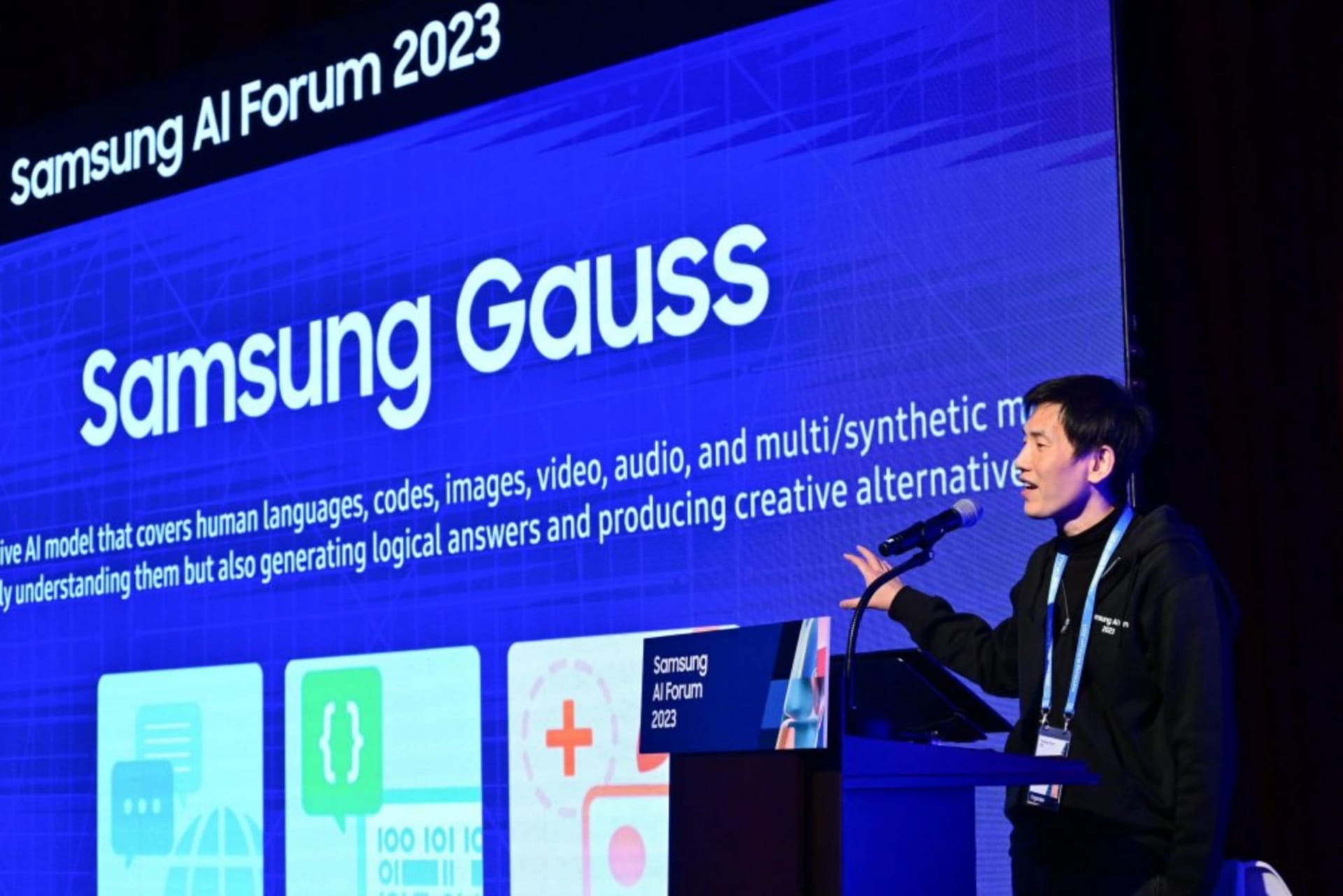
Following this event, Samsung Electronics continues to enforce a complete ban on ChatGPT within its DX division as of 2025, and utilizes its own internally developed local AI, ‘Gauss’. In the DS division, it is conditionally used under executive approval.
Many global enterprises that prioritize security, such as Amazon, Apple, SK Hynix, POSCO, JP Morgan Chase, Bank of America, and Citigroup, have also prohibited the use of cloud-based generative AI like ChatGPT within their organizations.
Numerous companies impose restrictions on the use of cloud AI for various reasons, including the development of innovative technologies, high competition in certain fields, or the critical importance of customer data security.

Are Cloud AIs Really Risky?
Is there really a security risk with cloud AI? Yes, indeed.
The incident surrounding the leakage from ChatGPT revealed by Samsung’s internal announcement underscored these risks.
Samsung advised employees to be aware that “Once any content is input into ChatGPT, the data is transmitted and stored on external servers, making it impossible for the company to retrieve it. If such content is incorporated into ChatGPT’s training, sensitive information could be made available to an indefinite audience.” They accordingly urged caution with its use.
An internal survey conducted among Samsung Electronics employees regarding the use of AI tools revealed that 65% of respondents thought “it is likely to cause security risks.”
Samsung even posted an article on the potential security risks of ChatGPT on its corporate blog.
Samsung pointed out in the blog post, “Due to the characteristics of language models like ChatGPT, the more parameters and data they have, the more accurate the answers become. The problem is that sensitive corporate information might remain on ChatGPT within this process. The ChatGPT model may not align with corporate requirements regarding privacy, security, and regulatory compliance.”
As explained by Samsung, the structural nature of cloud-based AI inherently poses security risks. Since data input into cloud AI is transmitted and stored on external servers for AI training, once uploaded, information is difficult to retrieve or completely delete. This poses a risk of sensitive corporate information being reused in responses to third-party inquiries.
Small and medium-sized enterprises (SMEs), in particular, might lack the necessary security infrastructure and specialized personnel compared to large corporations, heightening the risk of customer trust decline, legal liabilities, and loss of competitiveness should a data leak occur, thus threatening the very existence of the business.
Nevertheless, we cannot forgo the active use of AI for employee productivity and company-wide efficiency in the era of generative AI. Banning high-performance AI due to security concerns would ultimately leave a company lagging behind.
So what is the solution to this dilemma?
Enter ‘Local AI’. This article will elaborate on the differences between cloud AI and local AI, and how companies for whom security is paramount can utilize local AI alongside cloud AI.
📝 If your company wishes to utilize AI safely, read on to the end.
Differential Structure of Cloud AI vs Local AI
Reasons Why Local AI is Safe from an Enterprise Security Perspective
Security Checklist You Must Verify When Introducing Local AI
Recommended Local AI That Meets the Checklist

What is Cloud AI? Understanding the Cloud Model
Cloud AI refers to an AI system that operates on external servers over the internet.
When users input data through a web browser or application, this information is transmitted to cloud servers, where an AI model analyzes it and generates responses.
📌 Notable Cloud-Based Generative AI Services
ChatGPT - OpenAI
Claude - Anthropic
Gemini - Google
Copilot - Microsoft
All these services process user input data via external cloud servers, with some utilizing this data for AI model training.
Though cloud AI offers clear advantages in terms of convenience and performance, it inevitably comes with critical security risks.
💡 Advantages
Instant access to high-performance AI models
Automatic maintenance and updates
Ease of integration with diverse SaaS tools
⚠️ Disadvantages
Data is transmitted externally, losing control
Risk of sensitive information leakage
Risk of regulatory violations (cross-border transfers, deletion issues, etc.)
Unavailable for offline use

Following the ChatGPT leak incident in 2023, Samsung urgently introduced its proprietary AI 'Gauss'. In the DX division, where cutting-edge technology security is the highest priority, Gauss is still used instead of ChatGPT.
What is Local AI? Comparing the Merits and Demerits of Cloud AI vs Local AI
Local AI (Local AI) refers to an AI model and data that operate on corporate internal systems or personal PCs rather than external servers.
As all operations occur in a local environment without data leaving, its security and control capabilities are enhanced.
📌 Representative Local AI Solutions
inline AI
Ollama
PrivateGPT
LM Studio
💡 Advantages
Processes data without external transmission
High security and control capabilities
Customizable development and application for our company’s circumstances
Possibility of custom AI replacement for repetitive corporate tasks like RPA (Robotic Process Automation)
Usable even offline
⚠️ Disadvantages
Requires technical resources for initial adoption and setup
May have limitations compared to large-scale cloud models in general performance
Performance limitations based on hardware specifications
Local AI requires consideration of technical and operational constraints during introduction, but since all data processing occurs within the company environment, external leakage risks are structurally blocked, making it much safer to use, especially for companies handling sensitive data.
🔐 Overview of Security Comparison of Local AI vs Cloud AI
Aspect | Local AI | Cloud AI |
|---|---|---|
Data Processing | Processes only on internal servers/PC | Processes on external (cloud) servers |
Data Leakage Risk | None (Blocked structurally) | Persistent (Exists as a structural vulnerability) |
Security Control | Directly controllable by business | Depends on the service provider |
Offline Use | Possible | Not possible |
Then, What Local AI Solution Should You Choose?
While Local AI clearly offers security advantages,
not all solutions provide the same level of security and reliability.
To select a Local AI suited for your corporate environment, key criteria must first be assessed.
When looking to use AI for document-related tasks like document analysis and automated reporting, more crucial than raw generative capability is ensuring that the data flow and processing structure are securely designed.
Understanding RAG, the Concept of the RAG Model
One of the most noted frameworks is RAG (Retrieval-Augmented Generation).
Rather than producing nonsensical answers to user questions, RAG first searches for relevant documents from available information and generates answers based on that context.
Rather than focusing on self-directed learning, RAG emphasizes finding and providing documents most relevant to the user’s command, akin to an 'open book test' where precise generation is possible based on input data.
This method not only boosts productivity by leveraging the capabilities of an LLM-based AI smarter than people but also effectively restricts confidential information from leaking out.
Thus, it effectively prevents indiscriminate AI learning and fundamentally blocks any external exposure of confidential information.
Comparison of ChatGPT vs RAG
👉 Read More in Detail
📋 Checklist Before Adopting Local AI
When adopting Local AI, the following points must be checked:
☐ Data Storage Location: Is it stored and processed only within the company, not in the cloud?
☐ Data Transmission: Are only obfuscated information (vectors), not the entire original, transmitted externally?
☐ AI Processing Method: Is it context-based RAG, not mere generative?
☐ Data Policy of the Model Supplier: Is there a contract for Zero Data Retention (no data storage)?
Local AI Inline AI That Meets All the Checklist Criteria
inline AI represents a document generative AI solution that showcases the strengths and safety of Local AI.
Featuring a Local-based RAG (Retrieval-Augmented Generation) system,
it is designed so that all tasks are performed on the user's computer rather than cloud servers.
⚙️ Everything is Processed Within My Computer
When you add files to Inline AI, AI dismantles and analyses those files within your computer.
And when I instruct it on document writing or planning, it accurately creates responses contextualized based on my materials.
This entire process occurs solely within the user's computer, and the files themselves are never transmitted externally.
🔎 Learn More about How inline AI Protects Data Security
Local AI is Suitable for Fields Where Security Is Crucial, Like Law, Pharmaceuticals, Bio, and IT
For companies handling sensitive data, adopting a Local-based RAG system like inline AI is an excellent option to boost productivity while maintaining security.
Law Offices / Legal Firms: Many confidential information like contracts and litigation materials
Administrative Offices / Labor Firms: Handle various personal and sensitive information
Pharmaceuticals / Bio / Research Centers: Experimental records and patent documents with large damage upon leakage
IT R&D Firms: High-risk technical documents like source code, tech roadmaps, and meeting minutes
These companies face significant risks of legal liability, loss of competitiveness, and declining trust due to information leakage from using cloud AI, meaning the data control and security framework inherent to Local AI offer a tangible competitive edge.
Inline AI provides a realistic solution for such companies to introduce AI while not worrying about confidential information leakage.
Customized Generative AI With Security Is No Longer Optional
The introduction of generative AI in enterprises is now crucial for enhancing productivity. However, continuing to utilize cloud services like ChatGPT and Gemini poses significant data leakage threats.
Local AI solutions like Inline AI harness security and efficiency, safeguarding an enterprise’s invaluable data assets.
Safe AI utilization becomes a key to sustainable growth and building trust with clients.
Opt for a Local AI tailored specifically for our company.
👉 Local AI Adoption Inquiry
✅ Develop a Custom AI Agent for Our Company.
Innovation in AI for our company begins with internal data and inline AI.