Manufacturing
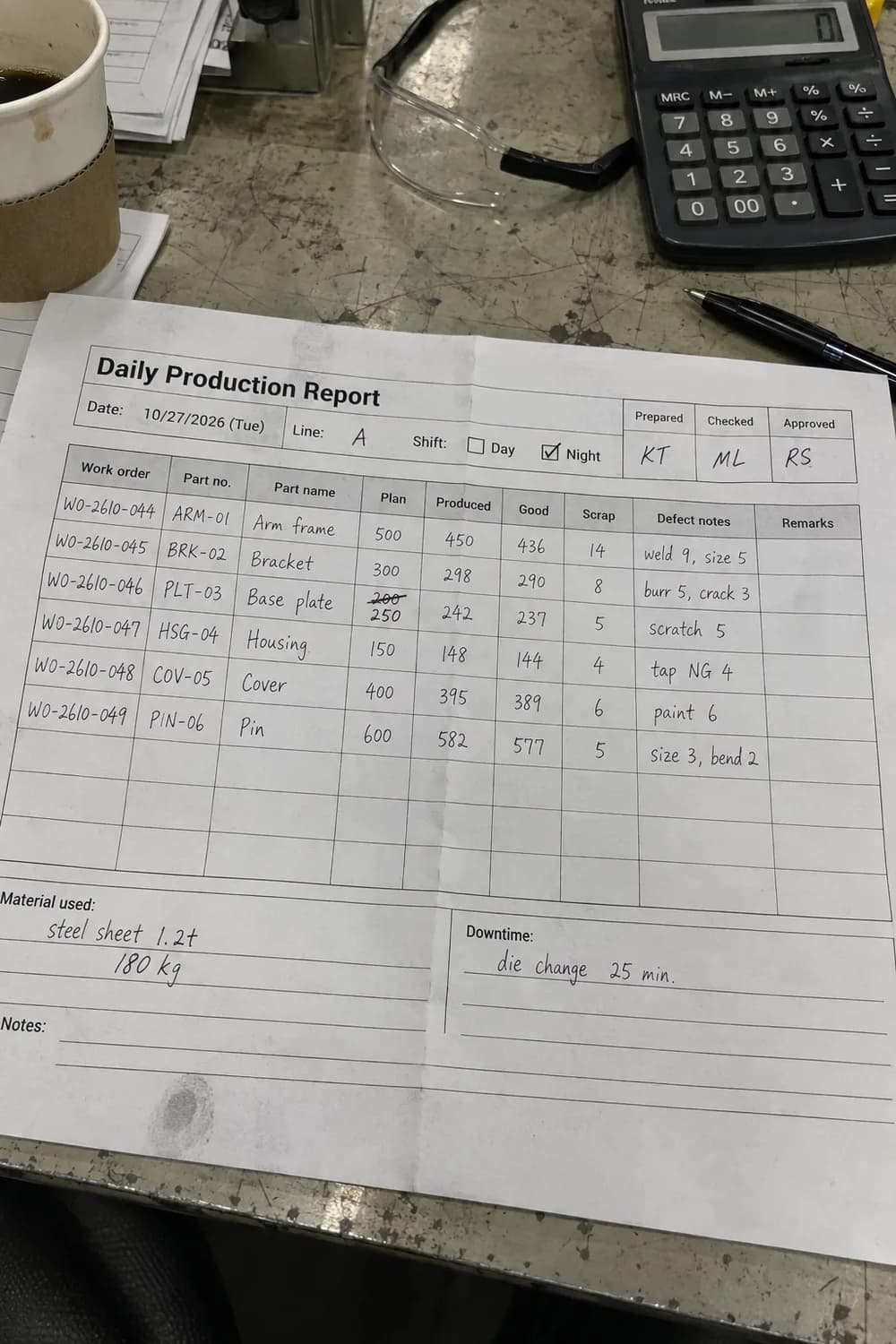
Output, uptime, and defect history are split across the MES, the ERP, and a folder of shop-floor spreadsheets. The rules that tie them together stop being one person's file — the plant runs them alongside you.
Volume by line and by part, plus equipment uptime, pulled together during the shift with plan-versus-actual and stop reasons in one view. Once the rule for planned versus unplanned downtime lives in the app, the next shift is counted the same way. A line supervisor sees their own line; the shift report rolls up all nine.
Shift report — Plant 1, all lines
Plant network onlyMES live linkProduction supervisorPlant 1 · all linesInspection results, process parameters, and material lots joined together, so a defect traces back to the lot and the machine it came from. Root cause, the CAPA, and the verification that follows stay on one thread, and the next occurrence starts from what was already tried. Supervisors see their line; quality assurance sees the plant.
Quality issues — Plant 1
Plant network onlyIATF 16949 recordsProduction supervisorPlant 1 · all linesThresholds: 3 occurrences in 30 days · Cpk under 1.33 · CAPA 7 days overdue
Standard cost set against actual material consumption, run time, and scrap loss per product, so the variance points at where it came from. Write the allocation rule into the app once and every close uses it, and the number stays the same when the owner changes. A line supervisor sees their own parts; the plant close shows all sixteen.
Product cost — July 2025 close
Plant network onlyERP close lockCost — restrictedProduction supervisorPlant 1 · all lines| Product | Actual cost | 6-mo trend | Variance |
|---|---|---|---|
| DDoor module A | 99.30 | +1.1% | +0.8% |
| DDoor module B | 100.75 | -0.5% | +0.4% |
| SSeat frame A | 49.35 | +7.6% | +6.6% |
| SSeat frame B | 46.05 | -0.5% | +0.7% |
| HHousing, large | 21.63 | +1.4% | +1.0% |
| HHousing, small | 13.72 | +9.5% | +7.5% |
| CCover, large | 3.42 | -1.4% | +0.6% |
| CCover, small | 1.85 | -1.6% | -0.5% |
| PPainted panel A | 28.15 | +6.1% | +4.1% |
| PPainted panel B | 26.75 | +0.6% | +1.4% |
| FFinished-goods pack | 2.12 | -1.4% | +1.0% |
| BBracket assembly | 14.53 | -2.5% | -1.5% |
| BBracket, single | 6.20 | -1.7% | -1.0% |
| CConnector harness | 17.93 | +5.7% | +3.9% |
| CConnector terminal | 0.45 | -2.2% | 0.0% |
| PPilot run lot | 46.80 | -7.9% | No standard |
Machine parameters, yield, and cost are your IP. The plant, line, and role assignments you already maintain become the access boundary, so there is no second permission model to design. Your MES and ERP stay where they are, and what we hold is the gate in front of them.
Process parameters, yield, and cost follow your existing permission tiers — a line supervisor sees their own line, planning sees the plant.
Supplier accounts see only the fields you expose, such as orders and delivery dates. Same app, different scope, and every read is logged with who opened it and when.
Writes to the MES and the ERP happen only through approved screens. The prior state is kept, every change can be rolled back, and there is a record of who changed what and when.
One spreadsheet you already run is enough to scope the first app.
Book a demo