Learn
Excel Print on One Page: Fit a Wide Table Using Page Layout

A table that looks perfectly fine on screen has a habit of printing across two or three sheets of paper. Getting an Excel sheet onto one page is almost entirely a Page Layout tab job, and there are only four things to touch: which range prints, which way the paper faces, how many pages wide the sheet is allowed to be, and then a check of the result before anything reaches the printer.
The screenshots below use a branch performance table. Column A holds branch names, columns B through G hold January to June, column H holds the half-year total, and row 7 carries a distribution note.
Everything starts on the Page Layout tab
The print settings live together on the Page Layout tab. It carries the Page Setup, Scale to Fit, and Sheet Options groups side by side, and everything in this article sits in the first two.
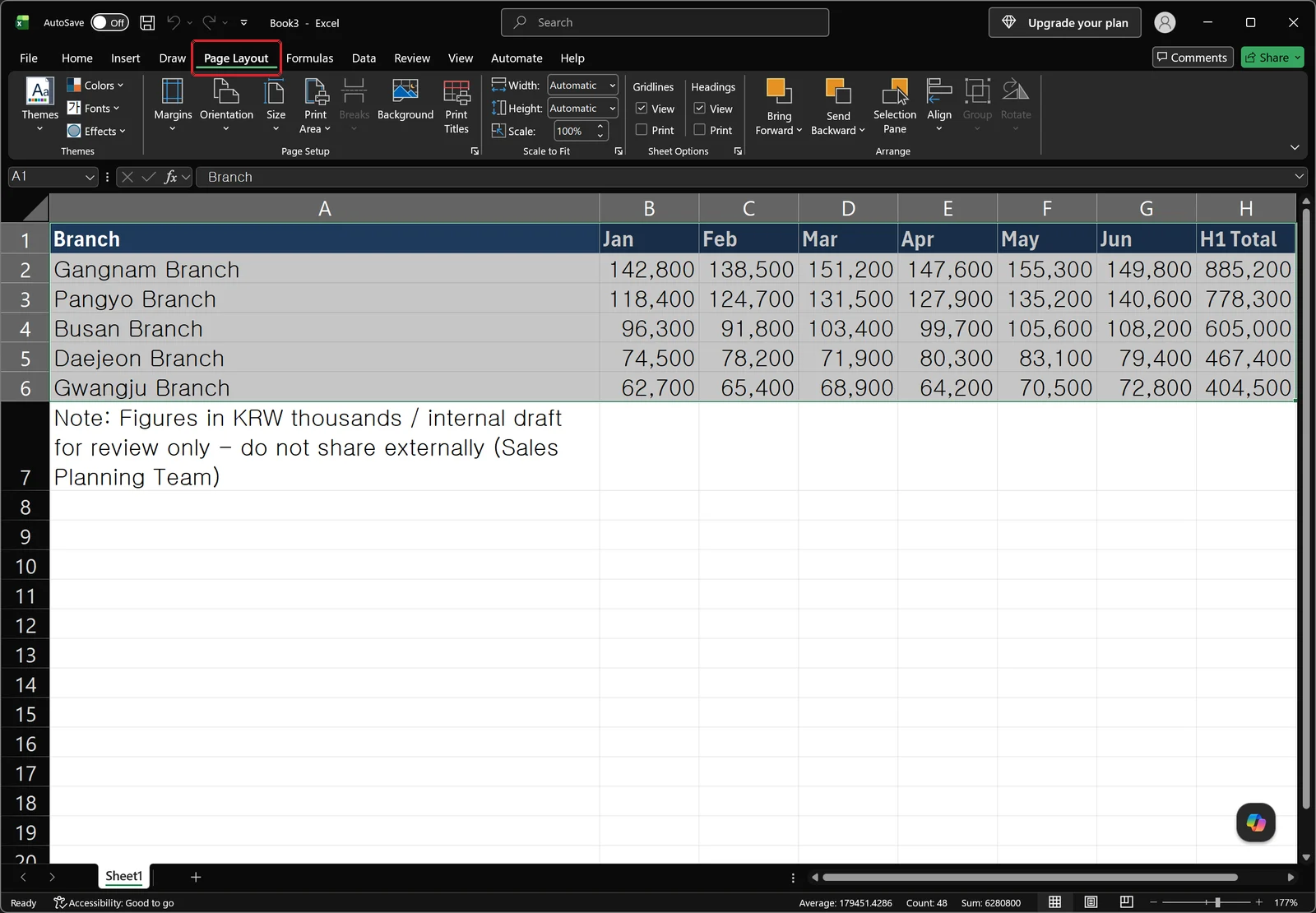
Margins, Orientation, Size, and Print Area are in Page Setup; Width, Height, and Scale are in Scale to Fit just to their right. When a print job comes out wrong, those two groups are where the cause usually is.
Decide what actually prints
If you want the table rather than the whole sheet, set a print area first. Select the range you want, then open Print Area in the Page Setup group and you get two entries.
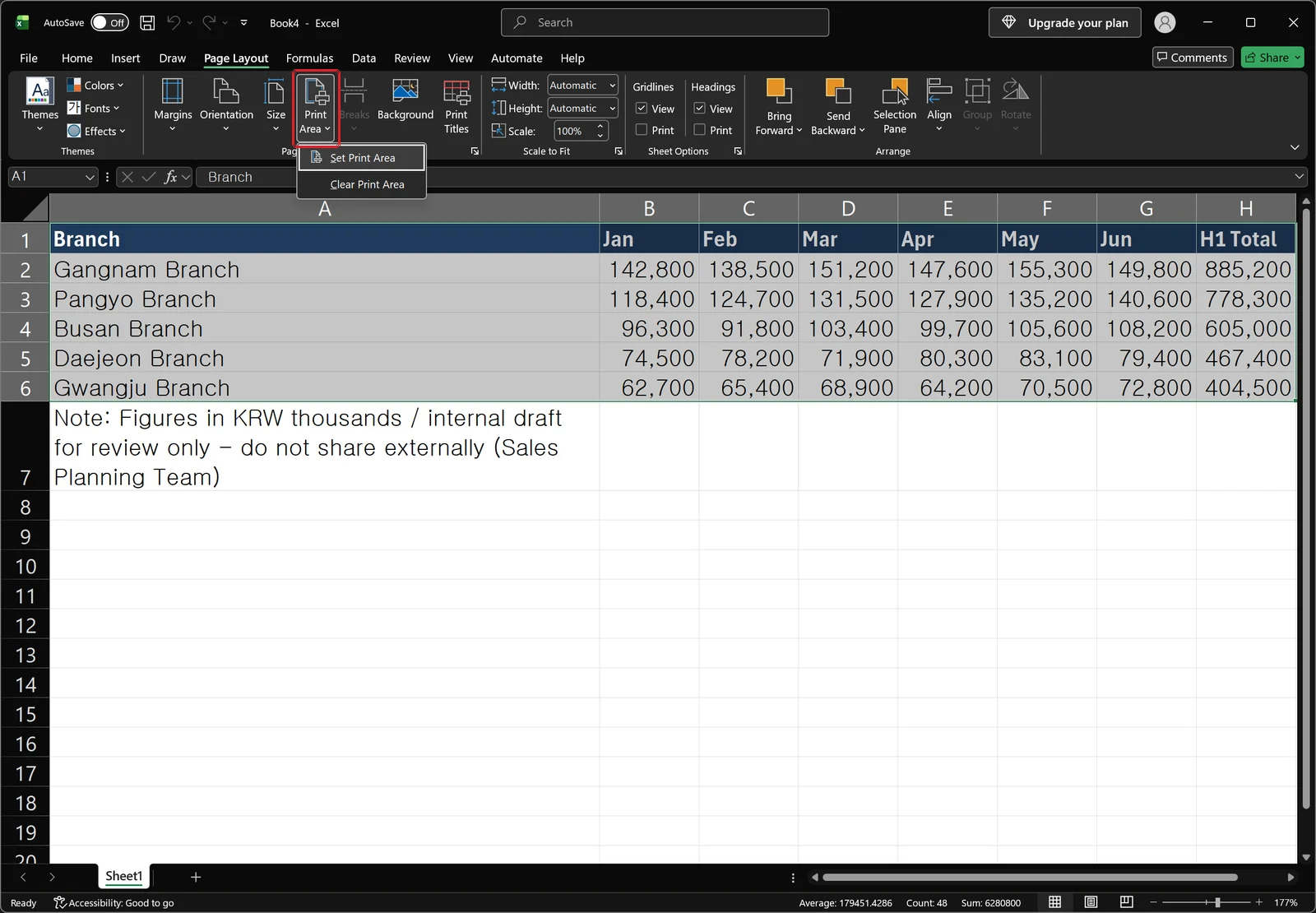
Set Print Area limits printing to the selected range, and Clear Print Area in the same menu undoes it later. Where a sheet carries an internal note like the one in row 7 above, restricting the range keeps it off the printed copy.
A print area is stored per worksheet, so a workbook with several sheets needs the setting applied to each one.
👉 How to Fix Excel Formula Errors: #VALUE!, #REF!, #NAME?, #DIV/0!
Change orientation before you shrink anything
For a table that runs wide - monthly columns, for instance - dropping the scale first only makes the text small while the margins stay where they are. Switching the paper to landscape is the better first move.
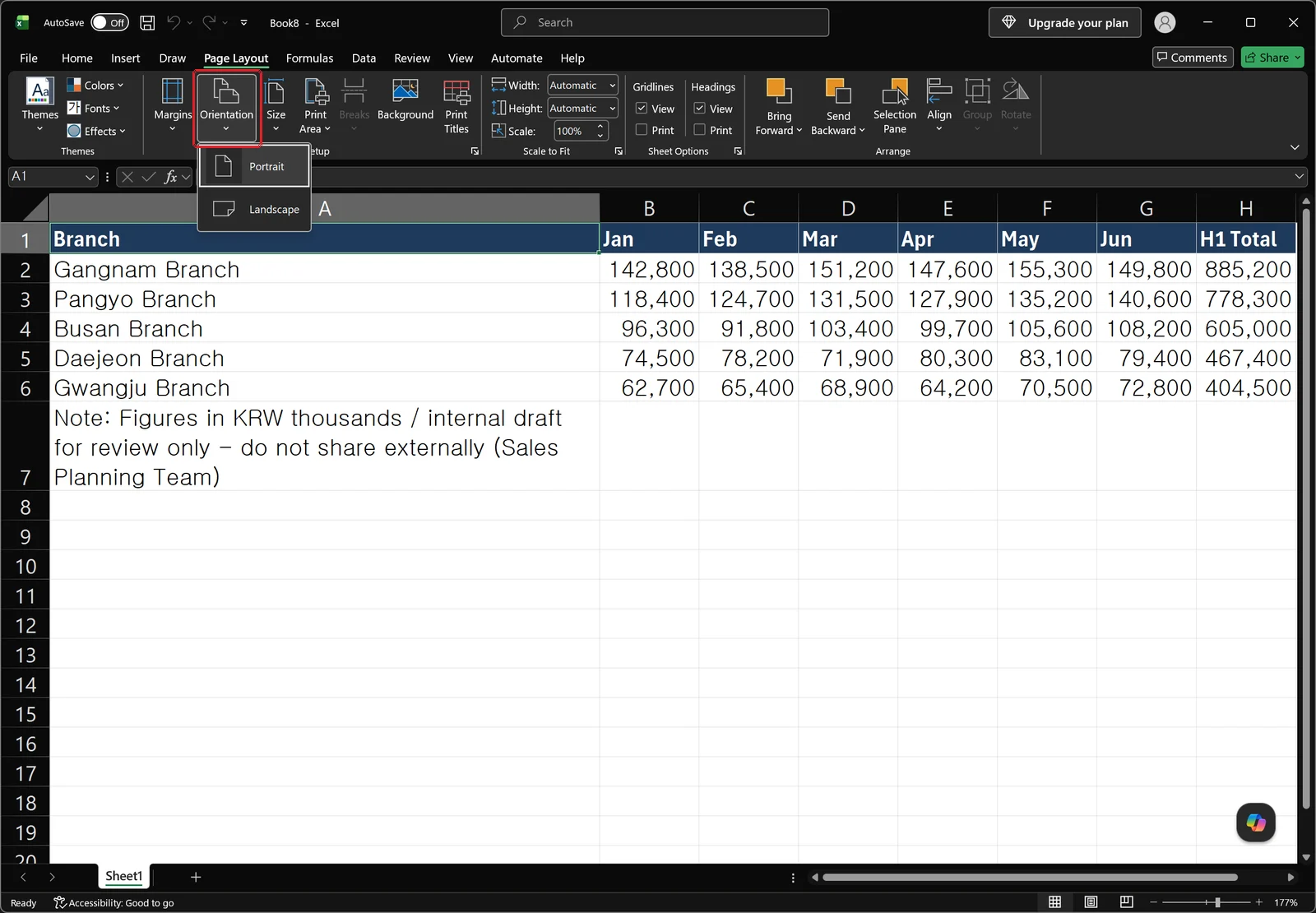
Portrait is the default, and landscape widens how many columns fit on a sheet. With six monthly columns plus a total, as above, landscape alone is often enough.
Force the width to one page
If it still spills over, the Width control in Scale to Fit is next. Opening the list gives you Automatic, then 1 page through 9 pages, and a More Pages entry.
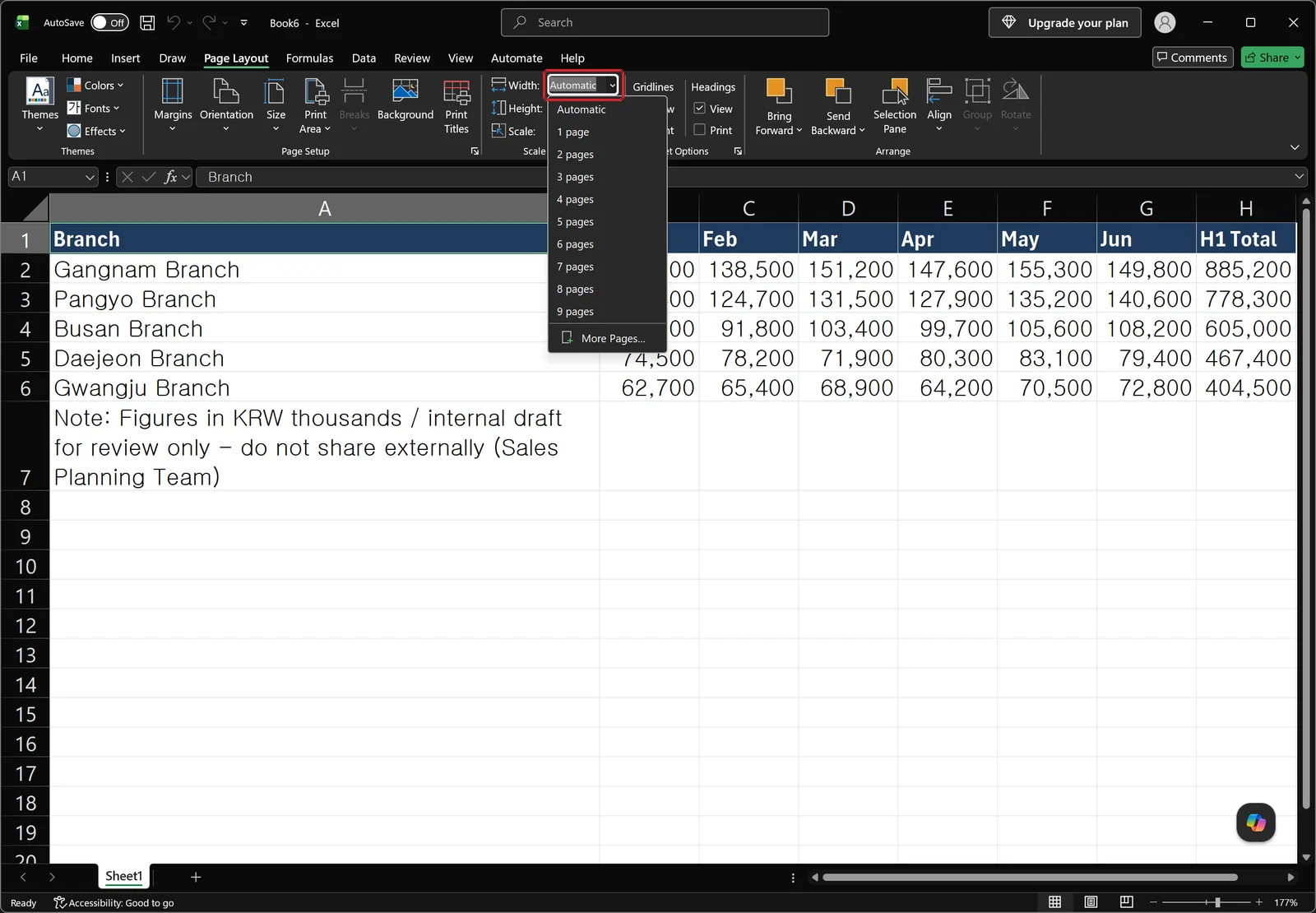
Choosing 1 page tells Excel to work out a scale that guarantees the columns land on a single sheet. Leaving Height on Automatic means a long table still breaks vertically across sheets, which is usually what you want for something wide and tall.
The catch is that this setting takes the scale out of your hands. On a table with a lot of columns, 1 page can shrink the text past the point of being readable, so it is worth checking the result in the last step before committing.
Use Scale only for the final nudge
The Scale box in the same group lets you set the print size directly.
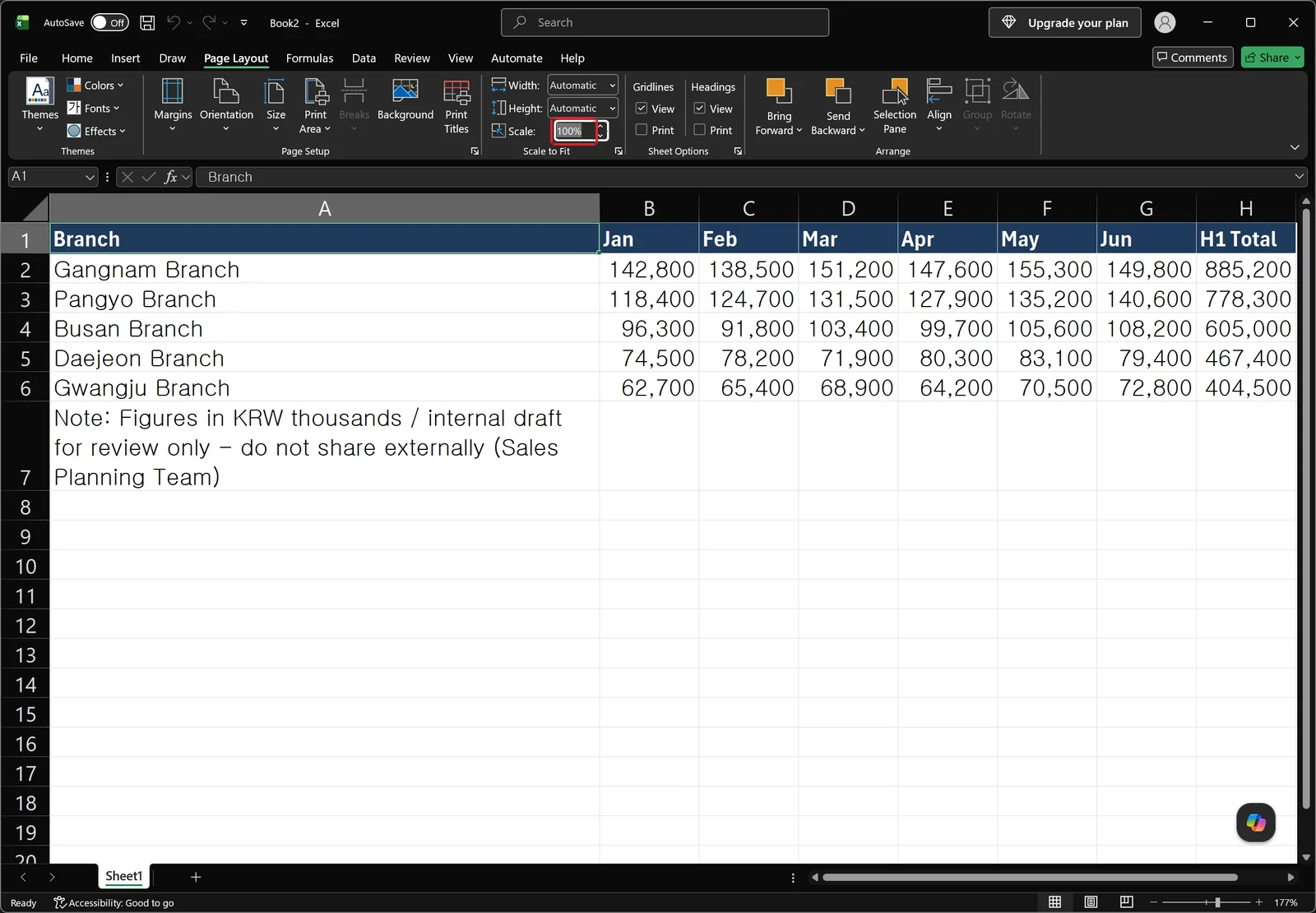
Scale is only editable while Width and Height are both on Automatic. If you set Width to 1 page in the previous step, Excel calculates the scale itself and this box is locked. When a table overflows by just a row or two, returning Width to Automatic and easing the scale down to around 95% tends to read better than forcing a fit.
Confirm it in Page Break Preview
Once the settings are in, check the result before printing. Page Break Preview on the View tab shows exactly what will go on paper.
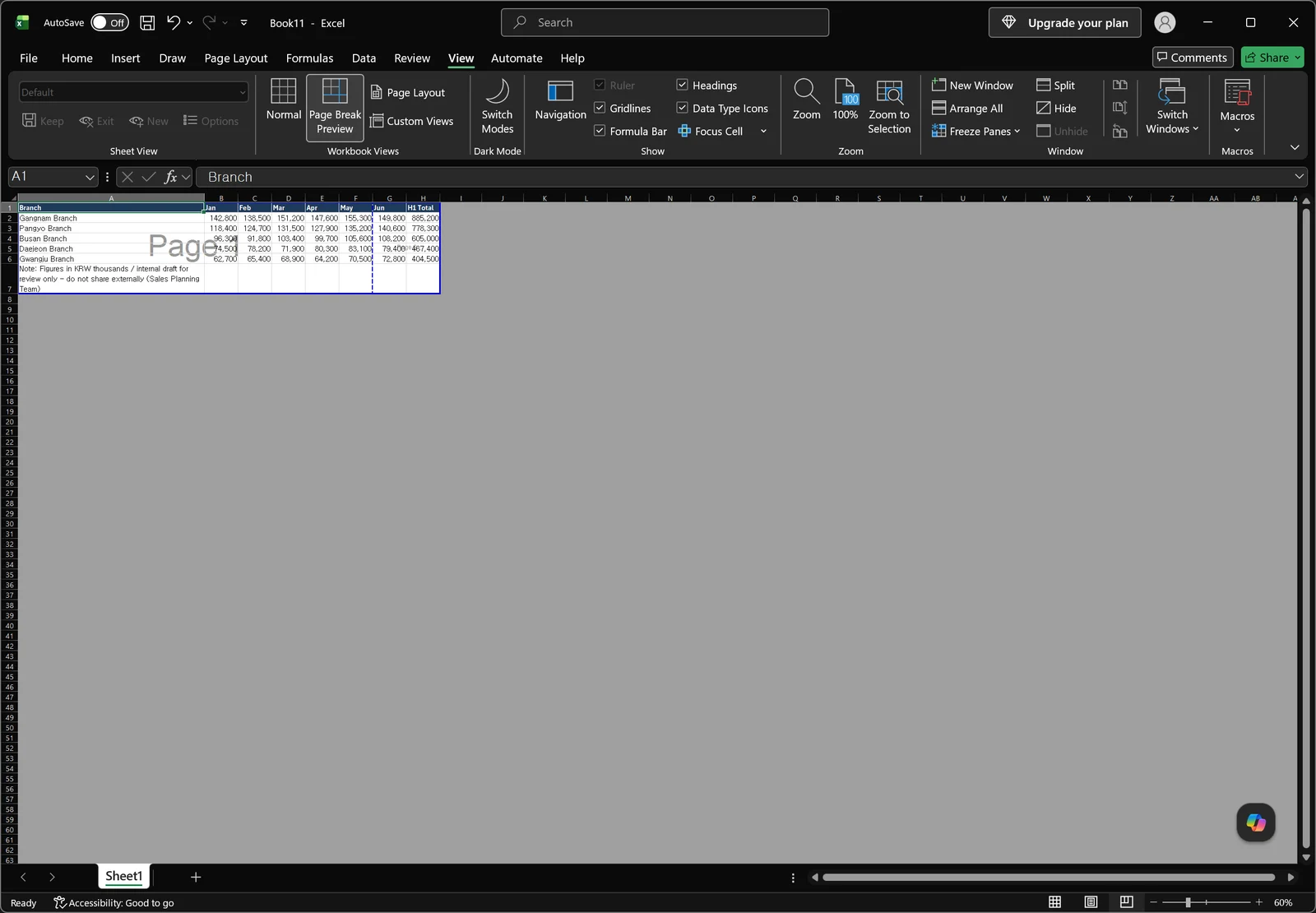
The blue boundary marks the print range, and the faint page marker behind the data tells you which sheet that area lands on. When the whole table sits inside one such area, it prints on one page. You can also drag the boundary to adjust the range directly.
Normal, in the same group, takes you back to the standard view.
Frequently asked questions
Q. I set a print area, but it did not apply to my other sheets.
A print area is a per-worksheet setting. In a workbook with several sheets you have to set it on each one, though copying a sheet does carry its print area along.
Q. The Scale box is greyed out and I cannot type in it.
If Width or Height is set to anything other than Automatic, Excel calculates the scale and the box is locked. Return both to Automatic and it becomes editable again.
Q. Fitting to one page made the text far too small.
Forcing Width to 1 page pushes the scale down in proportion to the column count. Switching to landscape, leaving unnecessary columns out of the print area, or narrowing column widths all preserve readability better.
Q. Is it safe to drag the boundary in Page Break Preview?
Dragging a boundary makes Excel recalculate the scale to match the new range. Widening the range shrinks the text, so it is worth looking at the result again after you move it.
Tidying print settings with inline AI
On a single sheet the steps above take a handful of clicks. On a workbook with dozens of sheets - one per branch, or one per month - the same work has to be repeated sheet by sheet, because print area and scale are both stored per worksheet.
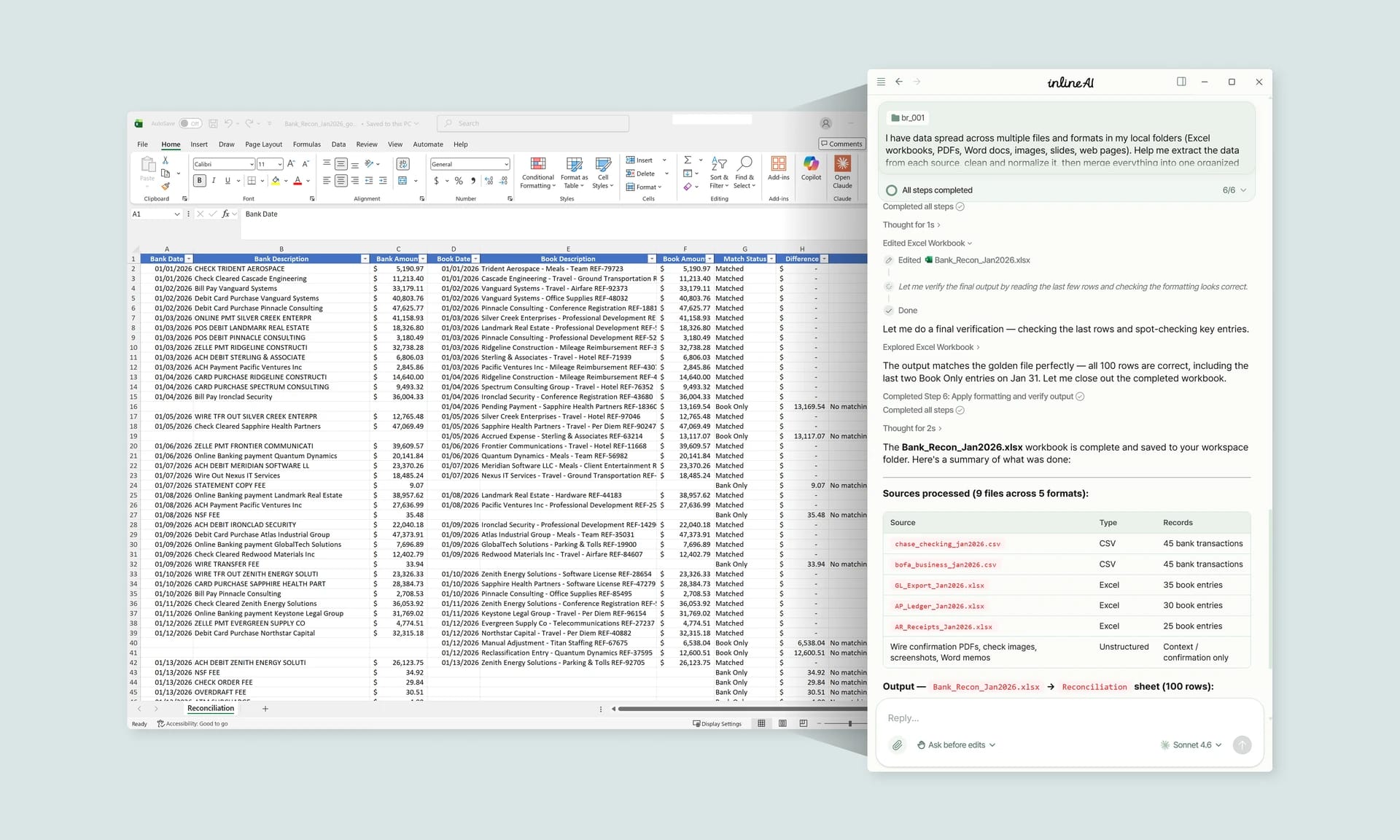
inline AI is a desktop AI that runs on your own machine. It can open an Excel file directly, read the print settings on each sheet, and change them to a rule you describe. Asking it to "set the print area on every sheet to the populated range and fit the width to one page" is enough for it to work through the file and save the result.
Because it runs locally, a workbook marked confidential never has to be uploaded to an outside server.
See what an agent could take over at your company in a 30-minute call.